
How to Read Nature for Navigation
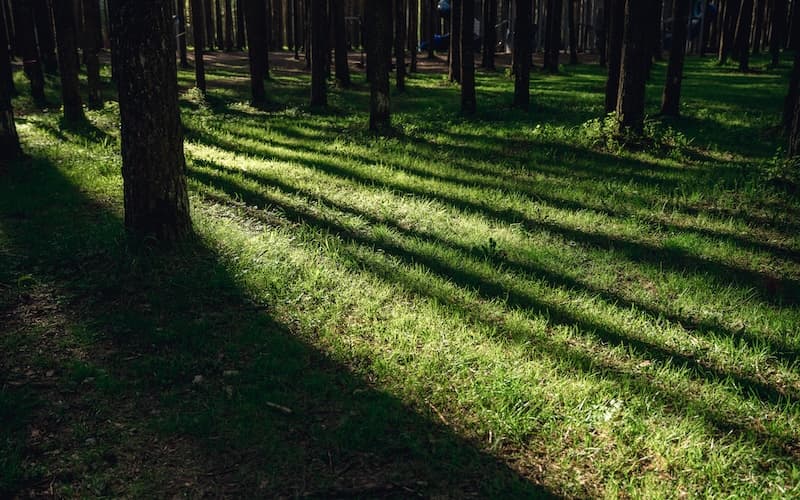
Technology has made navigation easier than ever, but what happens when your GPS fails or you’re in a remote area without signal? Long before modern tools, people relied on the environment to find their way, using subtle yet reliable indicators like the stars above and the ground beneath their feet. Mastering these techniques ensures practical navigation and fosters a deeper connection to the land that no modern tool can replicate.
Using the Sun’s Position
The sun has been a natural compass for centuries. In the Northern Hemisphere, it rises in the east and sets in the west, providing a reliable directional guide.
- At midday, when the sun is at its highest point, it will generally be due south.
- Use a shadow stick: plant a stick vertically in the ground and mark the tip of its shadow. Wait 15 minutes and mark the new shadow tip. Draw a line between the two points for an approximate east-west line.
- Stand with the first mark on your left (west) and the second on your right (east), and you’re now facing north.
Reading the Stars
Under a clear night sky, the stars become a powerful and accurate guide for navigation. The North Star (Polaris) is a fixed point in the northern sky and a dependable guide for direction.
- To find Polaris, locate the Big Dipper constellation. Draw an imaginary line from the two stars forming the edge of its “bowl,” and extend it upward until you reach the brightest star.
- In the Southern Hemisphere, use the Southern Cross constellation. Extend the long axis of the cross about four times its length to find an imaginary point near the south celestial pole.
Observing Vegetation and Tree Growth
Plants and trees can reveal a surprising amount about direction and climate.
- In the Northern Hemisphere, moss typically grows on the shaded, north-facing side of trees, though this isn’t foolproof in damp environments.
- Trees often grow more branches and thicker foliage on their southern-facing sides due to increased sunlight.
- On hillsides, plants and trees may tilt slightly downhill, toward more consistent sunlight.
Using Water Flow
Rivers and streams can act as natural highways, often leading to larger bodies of water or settlements.
- Most rivers flow toward lower elevations, such as valleys or coasts.
- In mountainous regions, water sources generally flow away from peaks, which can help orient you if you know the general geography.
- Following a water source downstream can eventually lead to human habitation.
Tracking the Moon
The moon can provide navigational clues.
- A crescent moon forms a line between its two points that can help approximate direction. In the Northern Hemisphere, drawing an imaginary line from the crescent's points to the horizon indicates roughly south.
- Understanding the phases of the moon and its position in the sky relative to the time of day can further refine your navigation skills.
Reading Animal Behavior
Wildlife often gives away the presence of water, shelter, or changes in terrain.
- Birds tend to fly toward water sources at dawn and dusk.
- Animals like deer and rabbits create well-worn trails leading to food or water.
- In coastal areas, seabirds flying inland often indicate the location of land nearby.
Clouds and Weather Patterns
Cloud formations can offer clues about direction and upcoming weather.
- In the Northern Hemisphere, prevailing winds generally move from west to east.
- Lenticular clouds—lens-shaped formations—often indicate the presence of peaks or ridges.
- Observing how weather interacts with local terrain provides valuable navigational insights.
Shadows and Time
Beyond the shadow stick method, your own shadow can be a helpful tool.
- If you know the approximate time of day, you can use your shadow to estimate direction.
- Stand upright with the sun to your left in the morning or right in the evening. Your shadow will point roughly north in the morning and south in the evening.
Conclusion
From the steady guidance of the sun and stars to the subtle clues in vegetation and wildlife, nature provides all the tools you need to find your way. These skills require practice and observation, but mastering them can give you the confidence to handle any situation where technology fails. Equip yourself with this knowledge, and you’ll be prepared to navigate through even the most challenging landscapes with the wisdom of generations past.